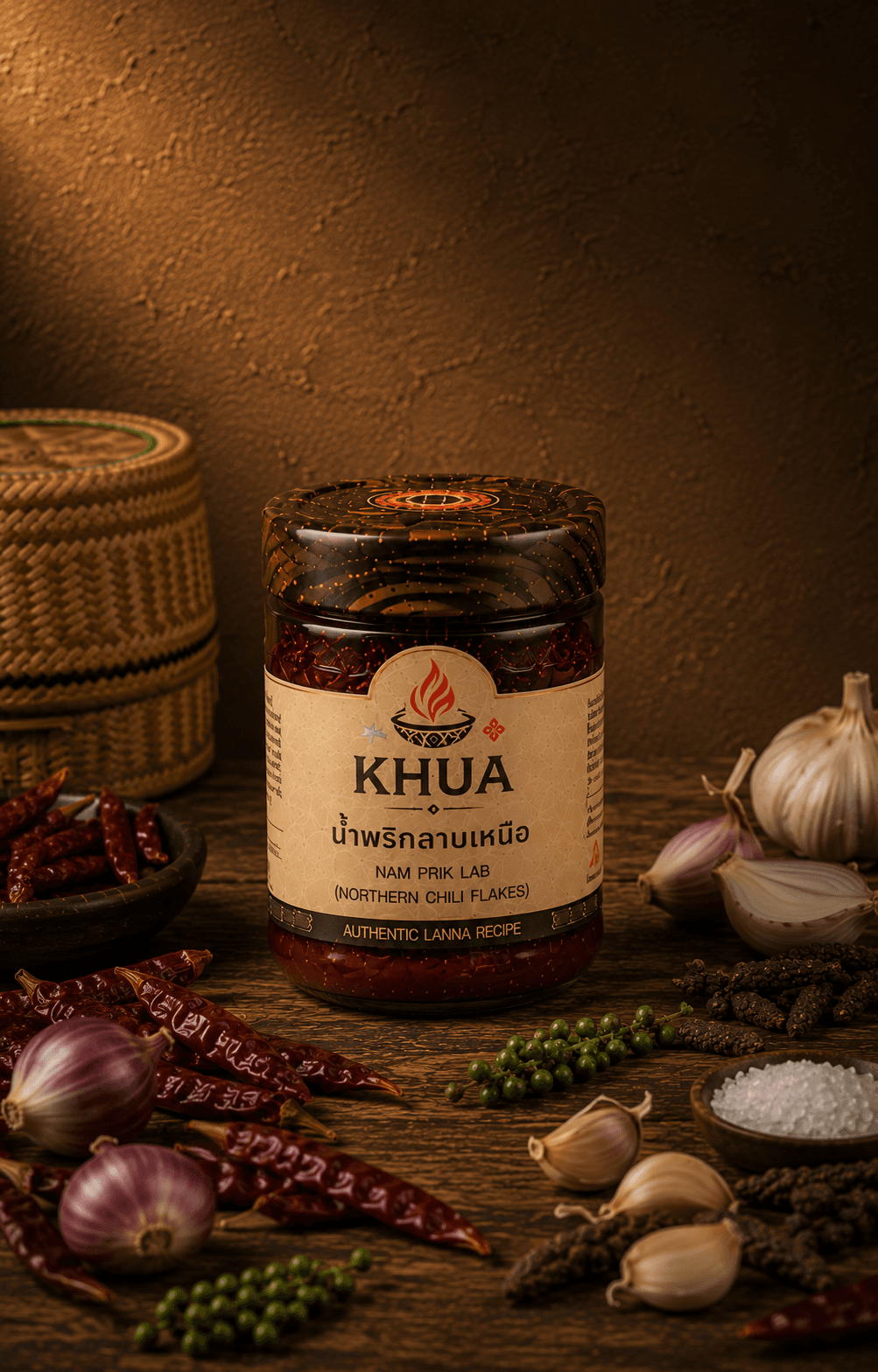
KHUA Phayao Northern larb chili paste carries the flavor of local Lanna cooking with a deep aroma from freshly roasted spices, rounded heat, and the savory complexity expected from traditional Northern larb.
The Phayao style has its own identity among Northern larb recipes. It emphasizes ma-khwaen, long pepper, and local herbs for a bold “larb mueang” character that works beautifully with pork larb, beef larb, kua larb, and many Northern Thai dishes.
What Is Phayao-Style Northern Larb?
Phayao-style Northern larb is a Lanna meat dish tradition from Phayao Province, known for using a generous amount of freshly roasted spices to create a distinctive aroma and deep, layered flavor.
Unlike Isan larb, which leans on sourness and toasted rice powder, Phayao larb focuses on roasted spice fragrance, soft heat, and Northern herbs.
- Aromatic roasted spices
- Deep savory flavor
- Soft, rounded heat
- Northern herb aroma
- Traditional dry-roasting technique
What Makes Phayao Larb Paste Distinctive
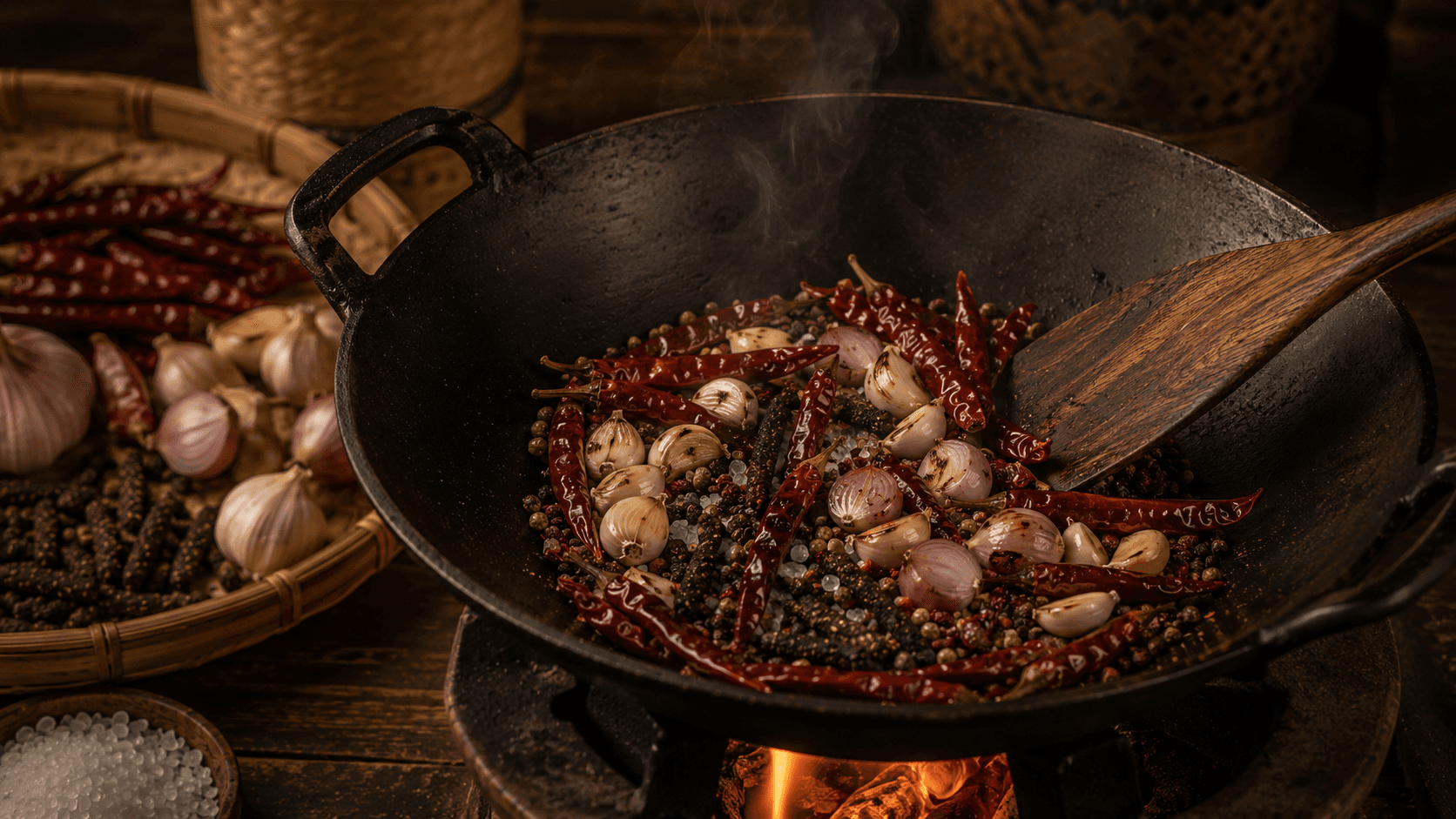
The Phayao recipe gives special attention to roasting spices because aroma is the heart of true Northern larb.
Each ingredient is roasted gently over low heat to draw out fragrance before it is ground into a concentrated paste.
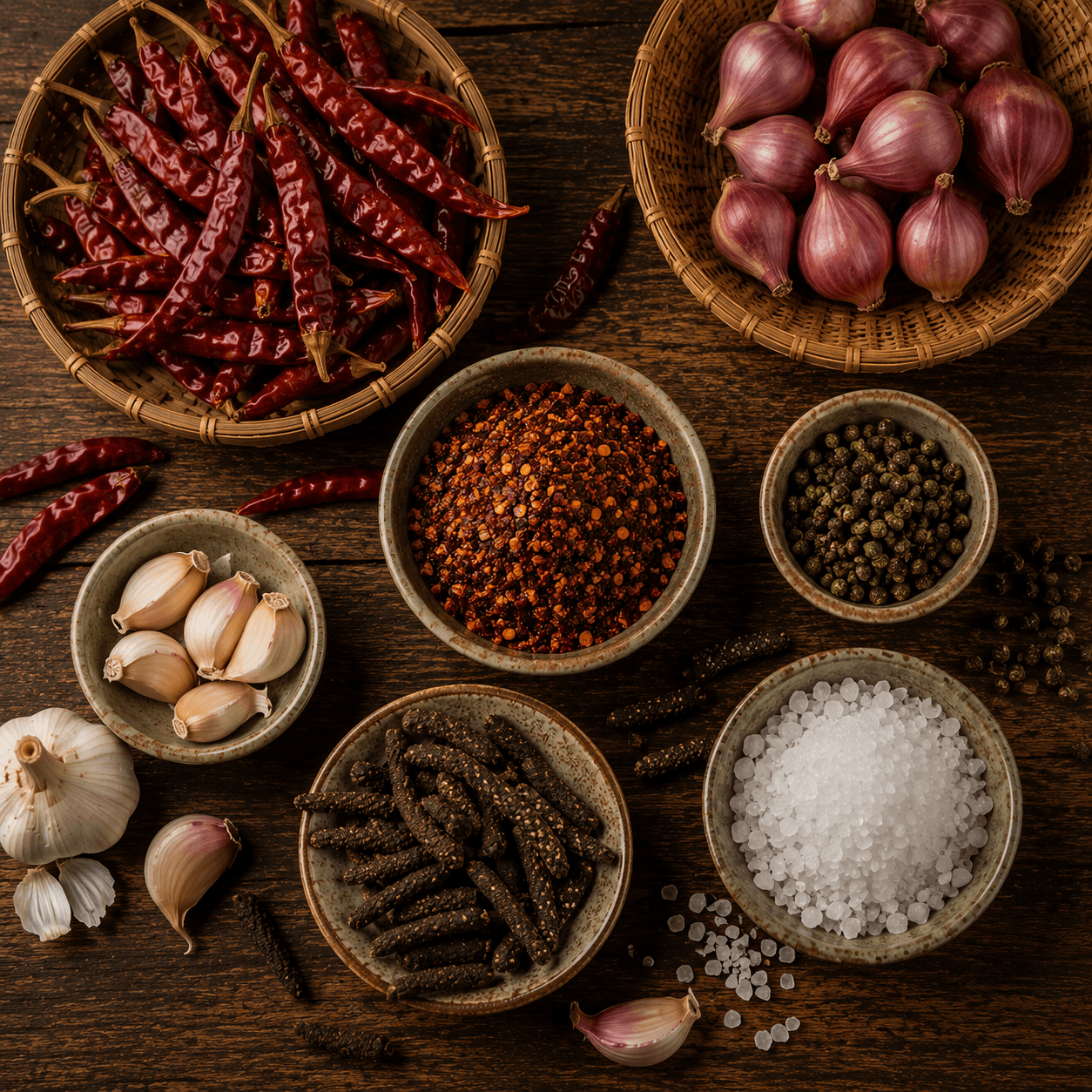
- Ma-khwaen peppercorns
- Long pepper
- Northern dried chilies
- Coriander seeds
- Cumin
- Thai garlic
- Shallots
- Aromatic rhizomes
- Local Lanna herbs
Phayao Larb vs General Northern Larb
| Phayao Larb | General Northern Larb |
|---|---|
| More intense spice aroma | Medium spice aroma |
| Often dry-roasted | Some recipes are wetter |
| Clear ma-khwaen character | Ma-khwaen may be lighter |
| Deep and bold flavor | Softer overall flavor |
| Distinct herbal aroma | More neutral aroma |
How to Make Traditional Phayao Northern Larb
Ingredients
- 300 g minced pork
- 2 tbsp KHUA Phayao Northern larb chili paste
- A small amount of fresh pork blood
- Spring onion
- Coriander
- Cooking oil
Method
- 1Warm a pan over low heat
- 2Add a little cooking oil
- 3Stir-fry the pork until it starts to cook
- 4Add the Phayao larb paste
- 5Continue roasting until the spice aroma rises
- 6Add a small amount of pork blood for depth
- 7Finish with spring onion and coriander
- 8Serve with hot sticky rice
Tips for Restaurant-Style Phayao Larb
- Always use low heat
- Roast the larb paste until fragrant before serving
- Add a little extra ma-khwaen near the end
- Use fresh pork or beef
- Pair with local vegetables to balance the spice intensity
What to Eat with Phayao Northern Larb
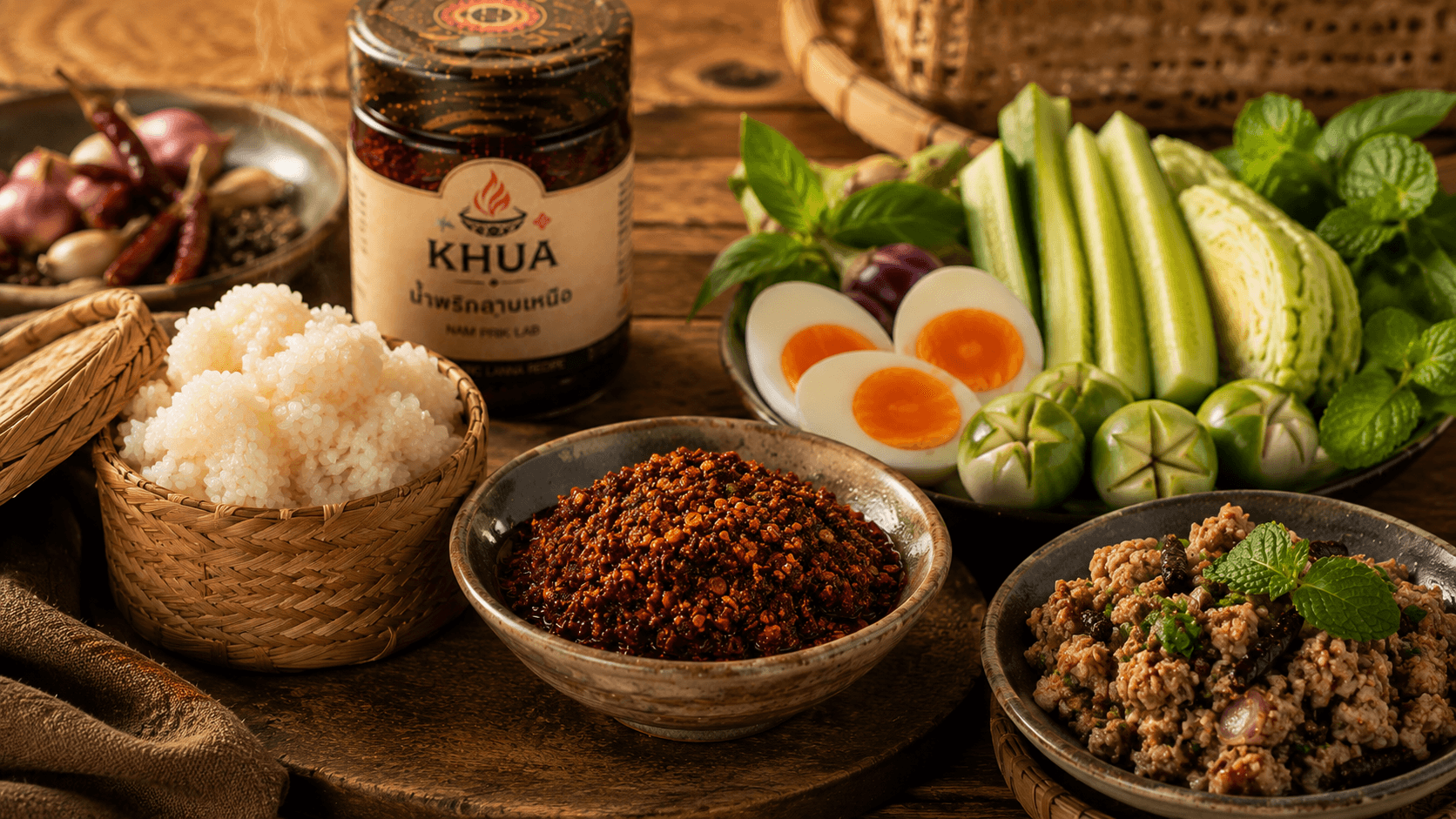
Phayao larb is commonly served with simple sides that balance its roasted spice depth.
- Hot sticky rice
- Pork crackling
- Chinese cabbage
- Cucumber
- Dill
- Yardlong beans
- Local Lanna vegetables
Dishes You Can Make with Phayao Larb Paste
- Northern pork larb
- Northern beef larb
- Kua larb
- Sai ua sausage
- Pork stir-fried with larb paste
- Chicken kua larb
- Northern larb fried rice
- Northern-style chili relish
Phayao Larb Culture
Larb mueang is an important Lanna dish, especially in Phayao Province, where families often prepare larb for merit-making events, housewarming gatherings, and family reunions.
Every household has its own details, but the shared heart of the dish is the aroma of freshly roasted spices.
Why Choose KHUA Phayao Recipe
- Authentic Phayao-style recipe
- Freshly roasted in small batches
- Aromatic Lanna spices
- Quality ingredients
- No preservatives
- Easy to cook with restaurant-style Northern flavor
FAQ
How is Phayao larb paste different from Chiang Mai style?
The Phayao recipe emphasizes a stronger roasted spice aroma and a clearer ma-khwaen fragrance.
Is Phayao Northern larb chili paste spicy?
It has medium heat, with more focus on roasted spice aroma and deep flavor than extreme spiciness.
What dishes can I make with it?
You can use it for pork larb, beef larb, kua larb, sai ua sausage, and many Northern Thai dishes.
Can children eat it?
Use a smaller amount to make the flavor milder for children or anyone who prefers less heat.
How should I store it?
Keep it in a tightly sealed container and avoid moisture to preserve the aroma of the roasted spices.